Agartala, July 15: The Tripura Tribal Areas Autonomous District Council (TTAADC) has reaffirmed its commitment to sustainable development by placing renewable energy and adventure tourism at the centre of its development agenda. On Wednesday, Chief Executive Member (CEM) Runiel Debbarma chaired two high-level meetings focusing on expanding solar energy access in tribal areas and promoting motorcycle tourism to boost the local economy.
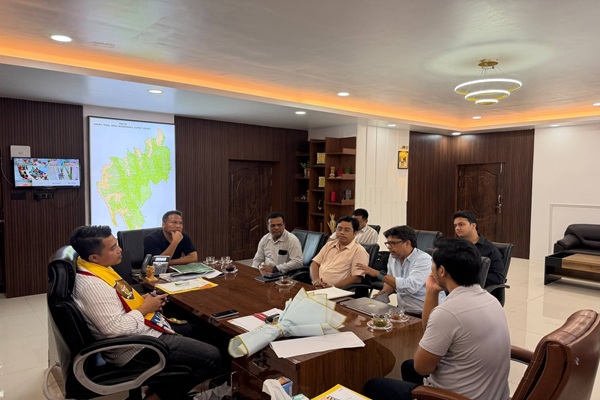
In the first meeting, Debbarma held detailed discussions with officials of the Tripura Renewable Energy Development Agency (TREDA) and representatives of the Asian Development Bank (ADB) regarding the implementation of large-scale solar power projects under the Transformation Renewable Acceleration in Tripura (TREAT) Programme.
The meeting was attended by International Social Safeguard Consultant S.N. Jena, Project Support Specialist Consultant Shahank Dhyani, Project Director Suraj Debbarma, along with former CEM Purna Chandra Jamatia, former Executive Member Rajesh Tripura, and MDCs Suraj Debbarma and James Debbarma.
Addressing the meeting, Runiel Debbarma said the initiative would begin with a pilot project aimed at providing reliable solar-powered electricity and water supply to villages within the ADC region. He stated that the Village Solarisation Programme would improve the quality of life in remote tribal areas by ensuring access to clean energy while strengthening essential public services such as drinking water and community infrastructure.
Earlier in the day, the CEM also met members of the Intrepidus LEONES Tripura Motorcycle Club (ILT MC) to discuss plans for promoting motorcycle tourism, adventure tourism, and greater youth participation in tourism-related activities.
A key proposal discussed during the meeting was the hosting of the North East Riders Meet (NERM) 2027 within the TTAADC area. The annual event is regarded as the largest motorcycle gathering in Northeast India and is expected to attract riders and visitors from across the region.
Debbarma said the event would provide an opportunity to showcase Tripura’s scenic landscapes, rich tribal culture, handicrafts, traditional cuisine and hospitality while generating employment and livelihood opportunities for local communities.
He emphasised the need to identify suitable venues, strengthen tourism infrastructure and encourage community participation to maximise the economic benefits of increased tourist inflow.
The twin initiatives reflect the TTAADC’s vision of promoting clean energy, sustainable tourism and youth-led development as key drivers of inclusive growth across the tribal areas of Tripura.