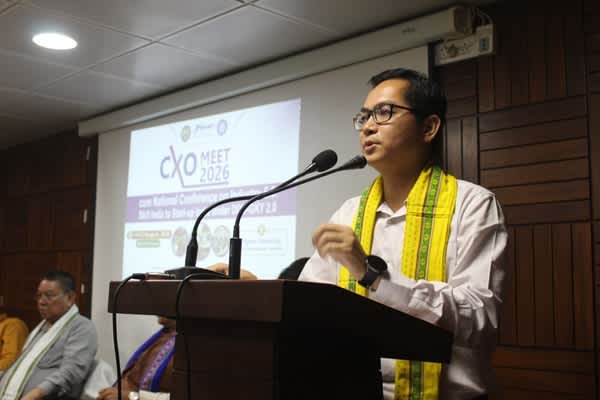
The Tripura Rural Livelihood Mission (TRLM), in collaboration with the Department of Rural Studies, Tripura University, organised a two-day programme to strengthen skill development, industry engagement and employment opportunities under the Deen Dayal Upadhyaya Grameen Kaushal Yojana (DDU-GKY 2.0).
The programme featured a National Conference on “Industries 5.0: Skill India to Start Up India” on August 11, followed by a CXO Meet on August 12, bringing together representatives from academia, industry and government to discuss the future of skilling and rural employment.
Prof. Debabrata Das, Vice-Chancellor of Tripura University, inaugurated the conference and highlighted the importance of stronger linkages among educational institutions, industries and skill-development agencies.
The first day witnessed paper presentations and academic deliberations by scholars from the Indo Bangal Chamber of Commerce (Tripura Chapter), Rabindra Bharati University, Bankura University, G.B. Pant University of Agriculture & Technology, Tripura University and Tezpur University. Discussions focused on Industry 5.0, entrepreneurship, technological transformation and changing labour-market requirements.
On the second day, the CXO Meet brought together representatives of more than 20 organisations, including NSDC Guwahati, SIPARD, Tripura Rubber Board, ILS Hospitals, NSE, V-Mart, PRAN Food & Beverages, Jain Udyog, Hotel Airdrop, Hotel Noah Spire and Vision Plus Security. They interacted with TRLM officials and DDU-GKY Project Implementing Agencies to explore opportunities for stronger industry participation in skill development.
Panel discussions focused on employability, industry expectations and sustainable employment opportunities. Employers emphasised that training programmes must remain closely aligned with market demand and equip rural youth with job-ready skills.
Addressing the closing ceremony, TRLM CEO Tarit Kanti Chakma, IAS, stressed that expanding skill-development initiatives could transform rural livelihoods while strengthening Tripura’s economic base. Certificates and awards were also presented to paper contributors.
Organisers said the programme reinforced the importance of industry–academia collaboration in bridging the gap between training and employment. The initiative is expected to strengthen DDU-GKY 2.0 by promoting demand-driven, placement-oriented skilling and creating sustainable livelihood opportunities for Tripura’s rural youth.