• home
National Spectrum- A English News Portal from Tripura
  • Homepage
  • Regional
  • National
  • International
  • Political
  • Sports
  • Entertainment
  • Others
No Result
View All Result
  • Homepage
  • Regional
  • National
  • International
  • Political
  • Sports
  • Entertainment
  • Others
No Result
View All Result
National Spectrum- A English News Portal from Tripura
No Result
View All Result
  • Homepage
  • Regional
  • National
  • International
  • Political
  • Sports
  • Entertainment
  • Others

Sati Pratha: Myth, History & Its True Origins

BINDUSMITA BHOWMIK

National Spectrum by National Spectrum
January 21, 2026
in Article
0
Sati Pratha: Myth, History & Its True Origins
0
SHARES
27
VIEWS
Share on FacebookShare on Twitter


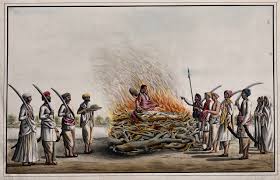
The practice of Sati—also referred to as Satidah Pratha—has long been projected as an ancient Hindu tradition. However, a closer examination of religious scriptures, historical records, and social history reveals that this belief is largely a misconception. There is no clear sanction, instruction, or compulsion for Sati in core Hindu texts such as the Ramayana, Mahabharata, or the Bhagavad Gita. Instead, Sati appears to have emerged much later as a social distortion shaped by feudal patriarchy, political instability, and misinterpretation of customs—particularly during the medieval and colonial periods.
Absence of Sati in Hindu Scriptures

The Ramayana provides one of the strongest counter-arguments to the claim that Sati is an ancient religious duty. After the death of King Dasharatha, none of his wives—Kaushalya, Kaikeyi, or Sumitra—committed Sati. They continued to live with dignity and respect. Similarly, in the Mahabharata, despite large-scale warfare and the death of many kings, queens like Gandhari, Kunti, and Draupadi did not self-immolate. Gandhari lived for years after the death of Dhritarashtra.

The Bhagavad Gita, considered the philosophical core of Hindu thought, emphasizes karma (duty), ahimsa (non-violence), self-realization, and devotion. It does not glorify death, self-harm, or the sacrifice of women in any form. On the contrary, Hindu philosophy traditionally views life as sacred and prescribes sanyasa (renunciation) or spiritual pursuit for widows—not death.
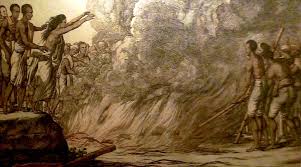
Then Where Did Sati Come From?

Historically, Sati seems to have originated as a rare, localized custom, not a widespread religious mandate. Early references to widow self-immolation appear sporadically in post-Gupta-era inscriptions (around 5th–7th century CE), mostly among warrior elites. Over time, especially during periods of foreign invasions and political chaos, Sati began to be linked with ideas of “honour,” inheritance control, and male lineage protection.

During medieval times, the practice gained more ground in certain regions due to:

Patriarchal control over women’s bodies and property

Fear of widows remarrying and claiming inheritance

Glorification by court poets and feudal elites

Social pressure rather than voluntary choice
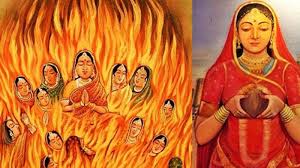

It is important to note that most cases of Sati were not voluntary. Many women were coerced, drugged, or socially blackmailed into the act.

Role of the British Period

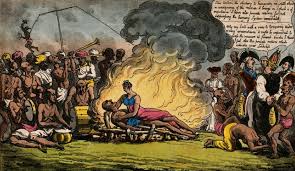
Contrary to popular belief, Sati did not end with British rule—it became more visible and documented during this time. British administrators recorded Sati incidents in detail, particularly in Bengal, Bihar, Rajasthan, and parts of present-day Uttar Pradesh. This documentation created the false impression that Sati was universally prevalent in ancient India.

In regions like West Bengal and nearby states, several cases were registered in the late 18th and early 19th centuries. Social reformers such as Raja Rammohan Roy strongly opposed the practice, citing scriptural evidence against it. His efforts, combined with growing resistance from Indian intellectuals and women, led to the Bengal Sati Regulation Act of 1829, which legally abolished Sati under Governor-General Lord William Bentinck.

Importantly, the British ban did not “introduce reform” out of benevolence alone; it followed intense Indian-led reform movements and public outcry.

Conclusion

Sati Pratha was neither an essential Hindu ritual nor a practice endorsed by sacred scriptures. It was a social evil that evolved due to historical circumstances, patriarchal dominance, and power structures—later falsely branded as “tradition.” The absence of Sati in the Ramayana, Mahabharata, and Geeta is not accidental; it reflects the fundamentally life-affirming and ethical nature of Hindu philosophy.

Understanding this distinction is crucial—not only to correct historical narratives but also to ensure that religion is not blamed for practices born out of social injustice. Sati stands today as a reminder of how customs can be manipulated—and how reform, reason, and courage can ultimately prevail.


Tags: History & Its True OriginsSati Pratha: Myth
Previous Post

Rights Group Condemns Bangladesh University’s Dismissal of Teachers Over Blasphemy Allegations

Next Post

Tripura Students Win Second Place at Viksit Bharat Dialogue 2026

Next Post
Tripura Students Win Second Place at Viksit Bharat Dialogue 2026

Tripura Students Win Second Place at Viksit Bharat Dialogue 2026

Leave a Reply Cancel reply

Your email address will not be published. Required fields are marked *

Latest News

Exiled Uyghurs in Turkey Fear Deportation Amid Arrests and Rising Pressure

Exiled Uyghurs in Turkey Fear Deportation Amid Arrests and Rising Pressure

by National Spectrum
February 10, 2026
0

  Ankara, Feb 10: Thousands of exiled Uyghurs living in Turkey are increasingly gripped by fear amid reports of arbitrary...

Malaysian Police Rescue Three Bangladeshi Workers in Anti-Trafficking Operation

Malaysian Police Rescue Three Bangladeshi Workers in Anti-Trafficking Operation

by National Spectrum
February 10, 2026
0

  Kuala Lumpur, Feb 10: Malaysian police have rescued three Bangladeshi nationals from alleged forced labour conditions at a construction...

Budget 2026–27 a Game-Changer for Farmers: Tripura Minister

Budget 2026–27 a Game-Changer for Farmers: Tripura Minister

by National Spectrum
February 10, 2026
0

  Tripura Tourism and Transport Minister Sushanta Chowdhury on Tuesday hailed the Union Budget 2026–27 as a landmark and transformative...

Tribal Welfare Minister Interacts with EMRS Students in Khowai

Tribal Welfare Minister Interacts with EMRS Students in Khowai

by National Spectrum
February 10, 2026
0

  Tribal Welfare Minister Bikash Debbarma on Monday evening visited the Eklavya Model Residential School at Rajnagar, Kalabagan in Khowai...

₹277 Cr World Bank Project Boosts Tribal Livelihoods in Tripura

₹277 Cr World Bank Project Boosts Tribal Livelihoods in Tripura

by National Spectrum
February 10, 2026
0

  A major ₹277.11 crore development initiative under the Tripura Rural Economic Growth and Service Delivery Project (TRESP) is gaining...

Tripura Steps Up Action on Stray Animals, Implements Supreme Court Directives

Tripura Steps Up Action on Stray Animals, Implements Supreme Court Directives

by National Spectrum
February 10, 2026
0

  The Government of Tripura has intensified efforts to manage stray animals and stray dogs across the state in compliance...

Women Block Road in North Tripura’s Kadamtala Demanding Safe Drinking Water

Women Block Road in North Tripura’s Kadamtala Demanding Safe Drinking Water

by National Spectrum
February 10, 2026
0

  Women residents of Saraspur Gram Panchayat’s Ward No. 2 under Kadamtala block in North Tripura on Tuesday staged a...

Tripura Police Recruitment Delay Sparks Protest Outside CM’s Residence

Tripura Police Recruitment Delay Sparks Protest Outside CM’s Residence

by National Spectrum
February 10, 2026
0

  Aspirants for 6,067 Special Executive posts under the Tripura Police on Tuesday staged a protest outside the residence of...

Tripura Journalists Hold Protest Demanding Safety, Welfare, and Justice

Tripura Journalists Hold Protest Demanding Safety, Welfare, and Justice

by National Spectrum
February 9, 2026
0

Agartala, Feb 9: Over 800 journalists and media workers from across Tripura gathered today in front of Rabindrabharati to demand...

Sharad Pawar Hospitalised in Pune with Chest Congestion, Condition Stable

Sharad Pawar Hospitalised in Pune with Chest Congestion, Condition Stable

by National Spectrum
February 9, 2026
0

  Pune, Feb 9: Nationalist Congress Party (Sharad Pawar faction) president and veteran leader Sharad Pawar was admitted to Ruby...

Facebook Youtube

© 2024 National Spectrum Designed by GKB Web Solution.

No Result
View All Result
  • Homepage
  • Regional
  • National
  • International
  • Political
  • Sports
  • Entertainment
  • Others

© 2024 National Spectrum Designed by GKB Web Solution.