Kathmandu, Dec 11 — Nepal’s economy is expected to grow at a significantly slower pace in the current fiscal year 2025–26, with the Asian Development Bank (ADB) projecting only 3 per cent growth, well below last year’s 4.6 per cent and half of the government’s 6 per cent target. The ADB’s latest Macroeconomic Update attributes the slowdown to political instability, weakened business confidence, delayed monsoon, and flood-induced agricultural losses.
The ADB notes that political uncertainty will particularly dent the manufacturing sector, whose growth is forecast to fall sharply to 1.7 per cent from 3.8 per cent in the previous fiscal year. Investor confidence has weakened due to instability, delaying new investments and production. The civil unrest on September 8–9 — part of the Gen-Z protests that toppled former Prime Minister K. P. Sharma Oli’s government — caused several deaths, widespread destruction, and losses estimated at NPR 36 billion, further shaking the private sector.
Although the new government under Prime Minister Sushila Karki has introduced an Economic Revival and Business Recovery Plan, domestic demand remains subdued. Weak consumer confidence, despite rising remittances, and cautious business sentiment are expected to hold back private consumption and investment.
Industry and construction are also projected to underperform, with construction growth expected to moderate to 2.1 per cent from 4.5 per cent due to poor capital spending by the federal government. Damage to major hotels — including the burning down of the Hilton and closure of the Hyatt Regency — has hit the accommodation and food service sectors, causing losses of NPR 25 billion.
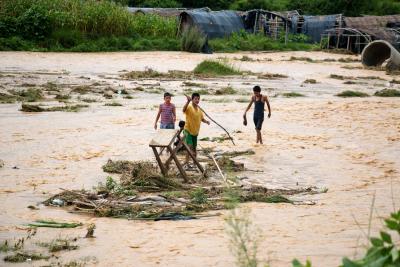
Agriculture is expected to grow by just 2.9 per cent, down from 3.3 per cent, as delayed monsoon rains and October floods reduce paddy output. Both the World Bank and Nepal’s central bank have echoed concerns, warning that overall growth could fall even lower due to prolonged instability and climate-related disruptions.