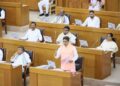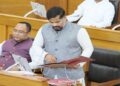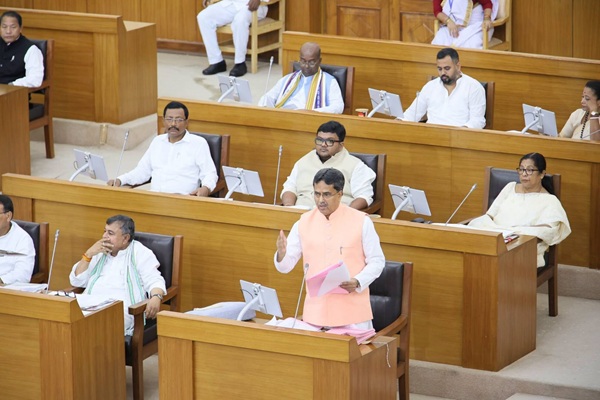
Nearly 80 per cent of households in the Tripura Tribal Areas Autonomous District Council (TTAADC) region have been connected to piped drinking water, Chief Minister Dr. Manik Saha informed the State Legislative Assembly on Thursday.
Speaking on the opening day of the Monsoon Session, Dr. Saha, who also holds the Drinking Water and Sanitation (DWS) portfolio, said the government is taking a series of measures to ensure that every village in the state has access to safe drinking water.
The issue was raised by Tipra Motha Party MLA Ranjit Debbarma, who highlighted continuing water shortages in several areas under the ADC. Referring to a recent road blockade in the Mungiakami hills of West Tripura district, during which Minister Kishor Barman was reportedly stranded, Debbarma urged the government to address the grievances of residents in the affected areas.
Responding to the concerns, Dr. Saha acknowledged that water shortages continue in some hilly and remote areas due to geographical challenges. Conventional deep tube wells cannot be installed at several locations because of unsuitable groundwater conditions.
To address these difficulties, the government is exploring alternative water sources, including canals and waterfalls, to provide drinking water to people living in difficult terrains.
Highlighting the progress made under the Jal Jeevan Mission, launched in 2019, the Chief Minister said rural piped-water coverage in Tripura stood at just 3.26 per cent when the programme began. The figure has now increased significantly, with around 6.69 lakh of the state’s 7.50 lakh rural households receiving piped water connections.
This represents around 86 per cent coverage across the state, according to the Chief Minister. He said the government remains committed to achieving 100 per cent household coverage and is working in coordination with the Central Government to extend drinking water facilities to every family.
The government is also focusing on innovative solutions to overcome terrain-related challenges and ensure that remote communities are not left out of the state’s drinking water mission.