India has embarked on a new chapter in its statistical and administrative history with the launch of the self-enumeration phase of the country’s first-ever digital Census, scheduled for 2027. The initiative allows citizens to register and update their household details online, marking a major shift from the traditional paper-based census process to a technology-driven system aimed at improving efficiency, accuracy, and transparency in data collection.
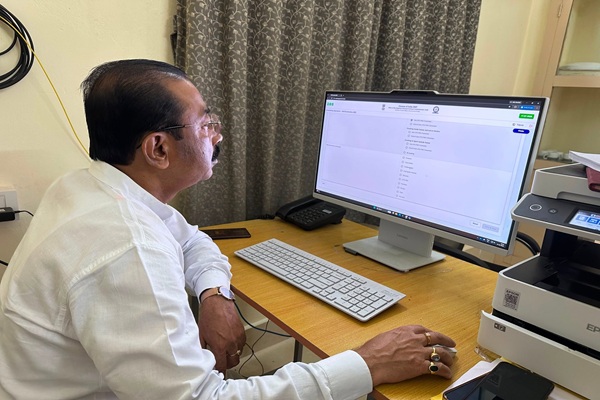
In Tripura, Rajya Sabha MP Rajib Bhattacharjee became one of the early participants in the digital exercise by completing the online registration of his family’s details on Saturday. His participation is being viewed as a significant step in encouraging public involvement in the nationwide initiative, which is expected to play a crucial role in shaping future development policies and welfare programmes.
Speaking after completing the self-enumeration process, Bhattacharjee appealed to the people of Tripura to actively participate in the digital census. He said the initiative not only saves valuable time but also represents an important milestone in India’s journey towards digital governance.
“This is not only about saving your valuable time but also about joining hands in building a historic digital society,” the MP said. He urged citizens to complete their online registration without delay and contribute to the success of one of the country’s most ambitious digital governance initiatives.
Officials associated with the census exercise said the introduction of self-enumeration is expected to simplify data collection by reducing dependence on paper forms and manual verification. The digital platform is designed to streamline data management, improve transparency, minimise errors, and enable faster processing of demographic information.
Authorities also noted that the new system empowers citizens to take direct responsibility for providing and verifying their household information, ensuring greater accuracy in the national database. The digital approach is expected to significantly reduce administrative workload while enhancing the quality and reliability of census data.
The Census remains one of the most important exercises undertaken by the Government of India, providing critical demographic information that forms the basis for policy formulation, infrastructure planning, resource allocation, and implementation of welfare schemes. The successful rollout of the self-enumeration phase is expected to strengthen evidence-based governance and support informed decision-making at both the national and state levels.
With the launch of India’s first digital Census, the country has taken a significant step towards modernising public administration, reinforcing its commitment to digital transformation while encouraging citizens to become active partners in nation-building through technology-driven governance.