A collaborative initiative involving the National Bank for Agriculture and Rural Development (NABARD), the Centre for Microfinance and Livelihood (CML), an initiative of Tata Trusts, and the Department of Agriculture & Farmers’ Welfare, Government of Tripura, is strengthening sustainable tribal livelihoods through scientific orchard development in Dhalai district.
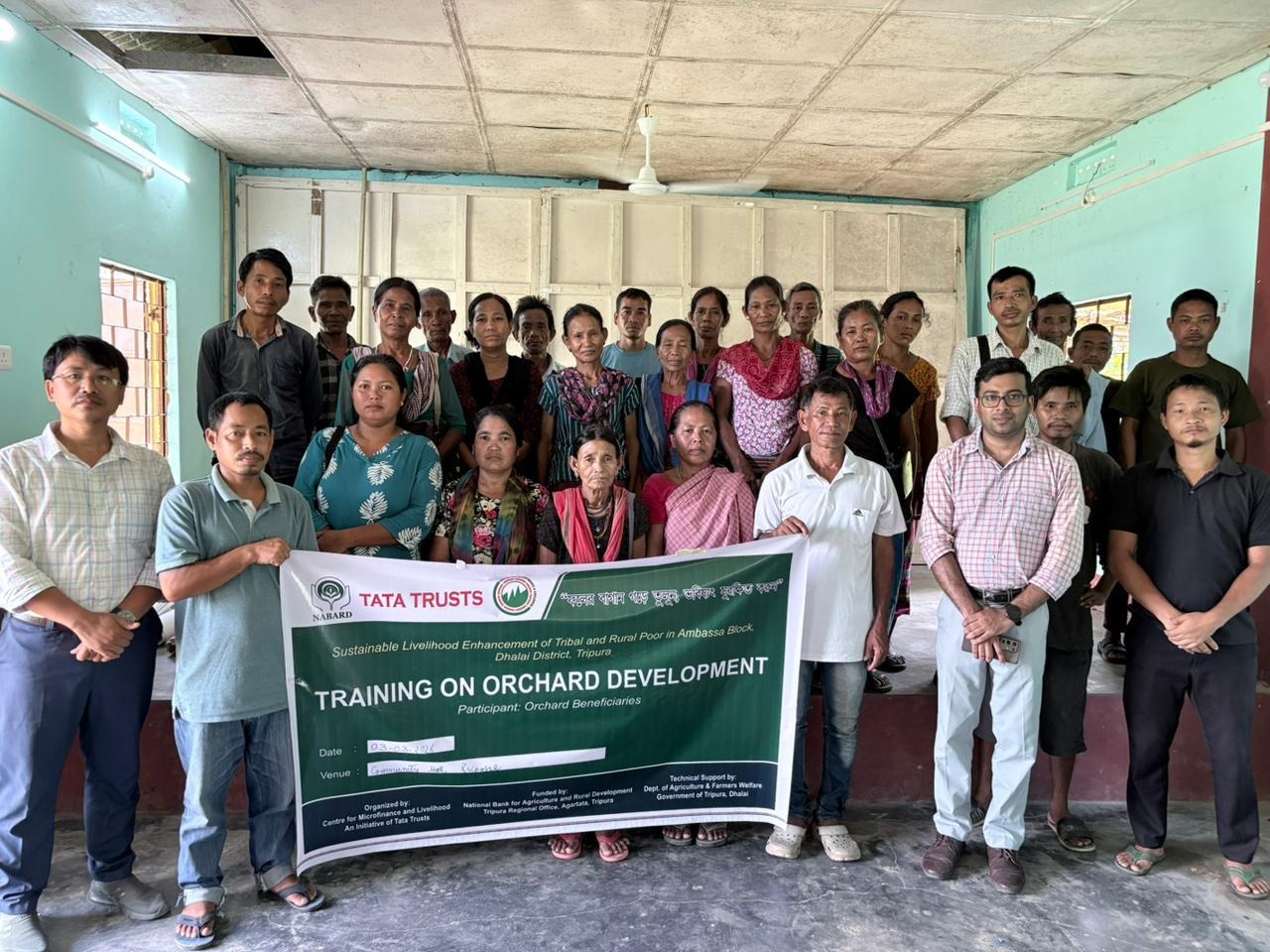
As part of the NABARD-supported Tribal Development Fund (TDF) project, a one-day training programme on orchard development was organised at the Raipassa Community Hall in Ambassa Block. The programme aimed to equip tribal beneficiaries with scientific knowledge and practical skills to establish climate-resilient orchards, thereby improving household incomes, ensuring food and nutritional security, and promoting sustainable land-use practices.
The initiative highlighted the importance of institutional convergence in rural development. NABARD extended financial support for the project, while CML coordinated its implementation. Technical experts from the Department of Agriculture & Farmers’ Welfare conducted field-oriented training sessions, enabling farmers to adopt modern and scientific cultivation practices.
Sector Officer Md. Siraj Miah led practical demonstrations covering various aspects of orchard establishment, including site selection, land preparation, pit digging, scientific planting techniques, nutrient management, irrigation, weed control, pest and disease management, and post-plantation care. The sessions provided hands-on guidance to beneficiaries, helping them understand the best practices for maintaining healthy and productive orchards.
Farmers actively participated in interactive discussions, raising queries on issues such as fertilizer application, irrigation management during dry spells, and safeguarding young saplings from pests and environmental stress. Agriculture experts addressed these concerns and shared practical solutions tailored to local conditions.
During the programme, a joint action plan was prepared outlining the responsibilities of beneficiaries, CML and the Agriculture Department. The plan includes timely site preparation, technical verification, distribution of extension materials and regular field visits to ensure effective adoption of recommended practices throughout the plantation season.
The training also focused on the cultivation of climate-resilient horticultural crops such as mango, litchi, lemon, pineapple and turmeric. Participants were introduced to concepts of value addition, post-harvest management and collective marketing to enhance farm profitability.
Officials expressed confidence that the coordinated efforts of NABARD, CML and the Agriculture Department would establish sustainable orchard-based farming systems, improve productivity and generate long-term livelihood opportunities for tribal families across Tripura.