Political differences between the ruling BJP and its regional ally, the Tipra Motha Party (TMP), are becoming increasingly visible in Tripura, with pending legislation of the Tripura Tribal Areas Autonomous District Council (TTAADC), seat-sharing negotiations for the upcoming Village Committee elections and demands concerning tribal rights emerging as major points of friction within the ruling alliance.
The BJP and Tipra Motha came together on the basis of commitments made under the March 2024 Tripartite Agreement, which raised expectations among the state’s indigenous population over greater political, administrative, constitutional and economic safeguards. However, more than two years later, questions over the implementation of the agreement continue to create political pressure on the alliance.
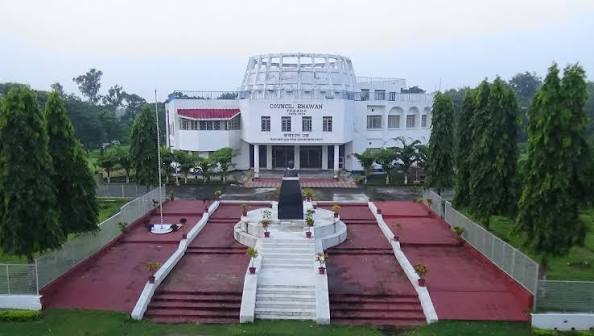
A major source of contention is the large number of bills passed by the TTAADC that remain pending in the legislative process. Tipra Motha leaders have repeatedly raised concerns over the delay, arguing that legislation dealing with issues important to indigenous communities cannot remain pending indefinitely.
Tipra Motha MLA Ranjit Debbarma has highlighted 37 bills passed by the autonomous council that, according to the party, concern important issues including tribal land rights, customary practices and administrative matters. The prolonged delay in giving these bills the necessary approvals has become a politically sensitive issue, particularly as Tipra Motha seeks to demonstrate to its supporters that its participation in the ruling alliance can deliver tangible results.
The issue has also been raised by party supremo Pradyot Kishore Debbarma, who has increasingly adopted a more assertive position on the implementation of commitments made to indigenous people. He has maintained that the alliance with the BJP does not prevent Tipra Motha from raising issues affecting Tripura’s tribal population.
The BJP leadership, meanwhile, has sought to prevent the differences from escalating into an open political confrontation. Chief Minister Dr. Manik Saha has played down reports of serious divisions within the alliance and maintained that the government is addressing issues raised by its partners.
However, the political temperature is rising as the TTAADC Village Committee elections draw closer. Seat-sharing negotiations between the BJP and Tipra Motha have reportedly emerged as another major challenge. Both parties have a significant organisational presence in different parts of the tribal belt, making the distribution of seats particularly sensitive.
For Tipra Motha, the Village Committee elections will be an important test of its independent political strength. The party has sought to retain its identity and influence among indigenous voters while remaining part of the BJP-led government. Pradyot has indicated that the party could consider contesting independently if its political interests and core demands are not adequately accommodated.
Any decision by Tipra Motha to go it alone would carry significant political implications. The party’s electoral strength in the tribal areas remains an important factor in Tripura’s political arithmetic, while the BJP also has a strong organisational network across the state. A direct contest between the two alliance partners could potentially benefit opposition parties by dividing votes in key constituencies.
The situation is further complicated by the position of another tribal-based ally, the Indigenous People’s Front of Tripura (IPFT). The party has continued to raise demands for greater political and territorial rights, including its long-standing separate-state demand. The participation of political leaders and ministers associated with the alliance in programmes supporting such demands has added another layer of complexity to the BJP-led government’s coalition management.
The competing positions of BJP, Tipra Motha and IPFT underline the challenges involved in maintaining a common political strategy among parties with different support bases and ideological priorities.
For Tipra Motha, the central question is whether it can remain in government while maintaining pressure on the BJP over issues that formed the basis of its political appeal. The party’s leadership faces pressure from its supporters to demonstrate progress on the Tripartite Agreement, TTAADC empowerment and indigenous rights.
The BJP, on the other hand, must balance alliance management with its own electoral interests. The party needs the support of its tribal allies but also wants to ensure that disagreements do not weaken its broader political position ahead of upcoming elections.
The TTAADC Village Committee elections are therefore emerging as an important political test. Beyond the question of seat-sharing, the polls could indicate whether Tipra Motha retains its influence in the tribal belt, whether the BJP can expand its presence there and whether opposition parties can exploit divisions within the ruling camp.
The pending TTAADC bills have consequently become more than a legislative issue. They are increasingly being viewed as a measure of the alliance’s ability to translate political commitments into action.
With the Assembly session also approaching, the conduct of BJP and Tipra Motha legislators inside the House will be closely watched. Their positions on tribal legislation, the Tripartite Agreement and other contentious issues could offer a clearer picture of the alliance’s stability.
For now, neither side appears ready for an immediate break. But the combination of pending legislation, difficult seat-sharing negotiations and competing demands from tribal allies has created a delicate political situation in Tripura.
The coming weeks could prove crucial for the BJP-Tipra Motha partnership. How the two parties handle the TTAADC bills, negotiate the Village Committee polls and respond to growing demands for greater tribal autonomy may determine not only the immediate future of the alliance but also the political landscape leading up to the 2028 Assembly elections.