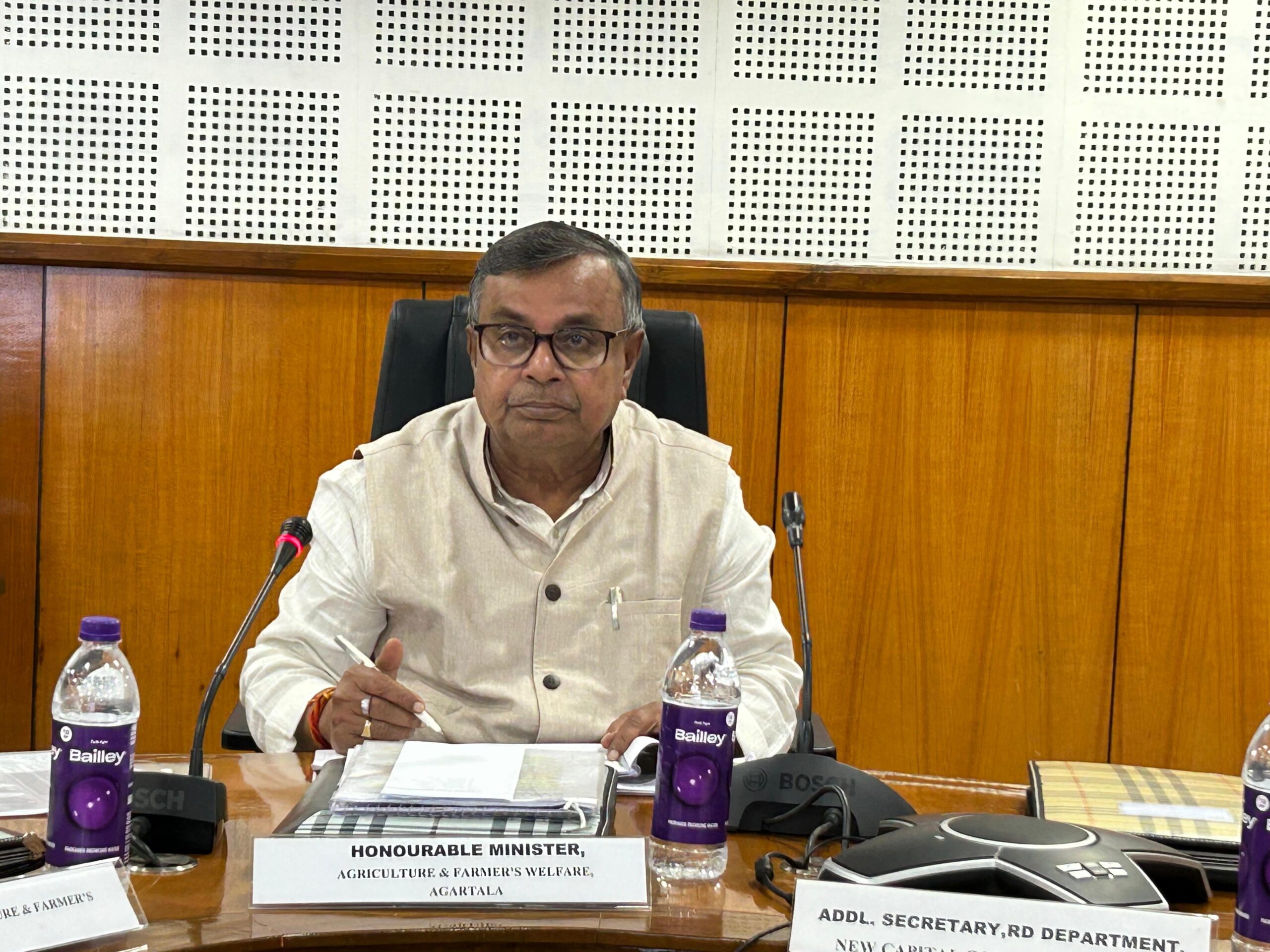
Agartala: Agriculture and Farmers’ Welfare Minister Ratan Lal Nath on Thursday said that Tripura’s underground water level remains in a safe and stable position, and the state government has undertaken a series of initiatives to ensure effective rainwater conservation and long-term water security for future generations.
The Minister was addressing the media after chairing an important Executive Committee meeting on the Watershed Development Project under the Pradhan Mantri Krishi Sinchayee Yojana (PMKSY) at Pragna Bhavan here. The meeting focused on reviewing the progress of ongoing projects and chalking out strategies for enhanced rainwater harvesting in the coming years.
Ratan Lal Nath said states that largely depend on rainfall must plan ahead to tackle potential water shortages. “To ensure rainwater is retained after it seeps into the soil, we have undertaken watershed development works such as construction of check dams, ponds, plantations and other related infrastructure. We have invested significantly in these initiatives and have achieved considerable success. After March, Phase 3.0 of the project will be launched,” he said.
Drawing comparisons with other states, the Minister noted that Haryana, Punjab and Rajasthan rely heavily on groundwater for domestic and agricultural use and are now facing serious water crises due to rapid depletion of underground reserves. In contrast, Tripura uses only 9.7 per cent of its available groundwater, while Assam uses around 15 per cent and West Bengal as much as 52 per cent.
“Tripura is currently in a safe position, but we must plan keeping the next generation in mind. That is why the Watershed Development Project under PMKSY is so important,” Nath said. He urged officials to ensure that the remaining project funds are utilised by January 15 so that the state can seek additional allocations in the next phase for further development.
Saha Sabhadhipatis from all eight districts were present at the meeting. The Minister also revealed that the government is considering developing water bodies along national highways, integrated with road connectivity, children’s parks, open gyms and plantation drives, as part of a comprehensive approach to water conservation and public welfare.