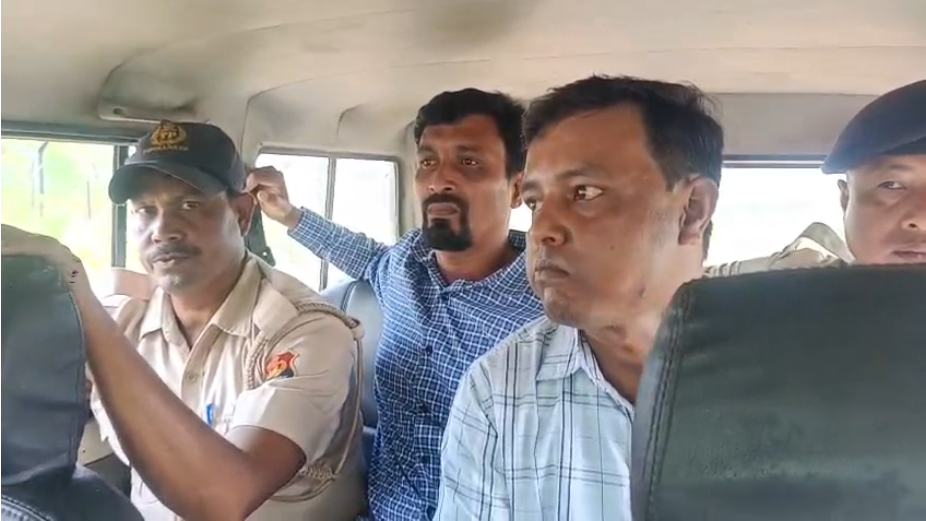
Agartala, March 23: Two Indian nationals who had been detained in Bangladesh for illegal entry and had served prison sentences were handed over to Indian authorities along the India-Bangladesh border in Tripura’s Khowai subdivision on Monday, officials said.
The repatriation took place around 11 a.m. at the Ballah border outpost near pillar number 1966 S in the Paharmura area. The handover was conducted in the presence of border guarding forces from both sides, involving personnel from the Border Guard Bangladesh and Indian agencies, including the Border Security Force and Tripura Police.
According to police sources, the two individuals were identified as Ajit Biswas from the Amtali police station area and Samir Das from Sidhai in Tripura. They had reportedly crossed into Bangladesh inadvertently in December 2024 while working on agricultural land situated beyond the barbed-wire fencing along the border.
Authorities in Bangladesh had arrested the duo for unlawful entry, following which a local court sentenced them to 28 days of imprisonment. However, Indian officials noted that the two remained in custody for nearly 16 months before being repatriated after the completion of all necessary legal and diplomatic formalities.
Officials from Chunarughat police station in Bangladesh, including the officer-in-charge, were present during the deportation process, alongside BGB personnel. On the Indian side, the handover was attended by Khowai police station officer-in-charge Krishnadhan Sarkar, the Sub-Divisional Police Officer (SDPO) of Khowai, and other officials.
A senior police official confirmed that all required procedures were followed before taking custody of the individuals. “They will be reunited with their families after the completion of formalities,” the official said.
The incident highlights the challenges faced by border residents, particularly farmers, who sometimes inadvertently cross into neighbouring territory due to unclear demarcations or agricultural activity near the fencing. Authorities from both countries continue to coordinate closely to ensure such cases are resolved through established protocols.