
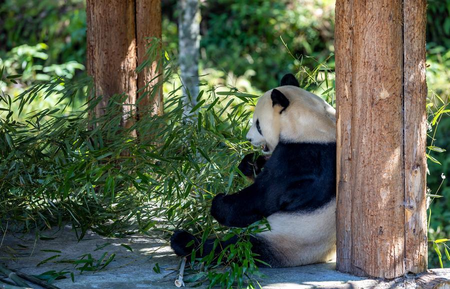
China's use of giant pandas as diplomatic goodwill ambassadors appears to be losing its influence, with public interest in zoos hosting the animals plateauing and criticism mounting over their commercialisation and use as instruments of political influence, according to a media report.
The report published by 'Free Malaysia Today' (FMT) said panda loans, once considered an important symbol of Beijing's soft power, are increasingly being viewed by political analysts and lawmakers as a "charming distraction" rather than a meaningful indicator of bilateral relations.
It cited the limited media attention in the United States to Chinese President Xi Jinping's recent announcement of sending a breeding pair of giant pandas to Zoo Atlanta as an indication of the declining appeal of the initiative.
The pandas, Ping Ping and Fu Shuang, arrived at the US zoo shortly after the announcement, continuing China's longstanding practice of sending the animals overseas to promote goodwill and project a friendly international image.
However, the report questioned the underlying objectives of the initiative, alleging that Beijing uses the iconic species to advance its diplomatic interests while commercialising wildlife conservation.
It also raised concerns over China's claims to the giant panda as a national symbol, pointing out that one of the species' primary natural habitats, Wolong, lies on the Tibetan Plateau.
The report linked this to broader concerns over China's treatment of Tibet's cultural identity and its incorporation of the region's landscape, wildlife and natural resources into the country's national narrative.
It further highlighted the presence of endangered red pandas in the Tibetan Plateau, alongside giant pandas, which are classified as vulnerable.
According to the report, fewer than 2,000 giant pandas remain in the wild, while China claims ownership of almost all of them.
It also questioned the commercial aspects of panda diplomacy, describing the overseas leasing arrangement as a lucrative programme involving breeding pairs.
The number of countries participating in active panda-leasing programmes has reportedly declined from 21 in 2019 to 16 currently, raising questions even within Chinese state media about the initiative's declining appeal.
The report also flagged conservation concerns, noting that captive-bred pandas released into the wild often struggle to survive due to inadequate survival skills, while wild pandas can be aggressive.
It argued that growing scrutiny of animal welfare and conservation practices could further undermine the diplomatic value of China's panda programme.