Agartala, Nov 19: Tripura on Thursday highlighted its best practices, implementation challenges and recommendations for improving Pre-Matric and Post-Matric Scholarship schemes for Scheduled Caste students at a departmental summit in New Delhi, an official said.
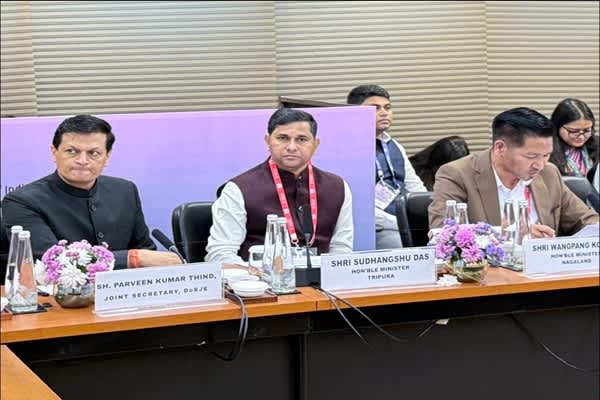
State ARDD, Fisheries and Scheduled Caste Welfare Minister Sudhangshu Das presented Tripura's experiences and suggestions during the first session of the second day of the Departmental Summit on 'Samaveshi Niti Sankalp' at Sushma Swaraj Bhawan.
The session focused on the implementation of Pre-Matric and Post-Matric Scholarship schemes and explored ways to make educational assistance more effective and accessible to eligible students.
During his presentation, Das outlined the best practices adopted by Tripura's Scheduled Caste Welfare Department in implementing the scholarship programmes, highlighting initiatives and experiences that could help improve their delivery.
He also drew attention to various challenges and practical difficulties encountered by the state while administering the schemes, bringing ground-level implementation issues to the attention of policymakers and other participants.
The minister emphasised the need to address these hurdles and put forward a set of recommendations and constructive solutions to make the scholarship delivery mechanism more efficient.
His presentation covered both the progress achieved by the state and areas requiring further intervention to ensure that eligible beneficiaries receive timely and effective educational assistance, the official said.
Scholarship programmes play an important role in supporting students from economically and socially disadvantaged sections by helping them continue their education and reducing financial barriers.
The summit provided a platform for representatives of different departments and states to share their experiences, discuss implementation-related concerns and suggest policy measures for strengthening welfare schemes.
Tripura's participation was aimed at bringing state-level experiences into the broader national policy discussion and contributing to efforts to improve the effectiveness of scholarship programmes.
By highlighting successful practices alongside operational difficulties, the state sought to underline the importance of addressing administrative and implementation gaps to ensure that educational benefits reach deserving students.
The minister's intervention also reflected Tripura's focus on strengthening welfare initiatives for Scheduled Caste students and improving access to educational opportunities through more effective implementation of scholarship schemes.