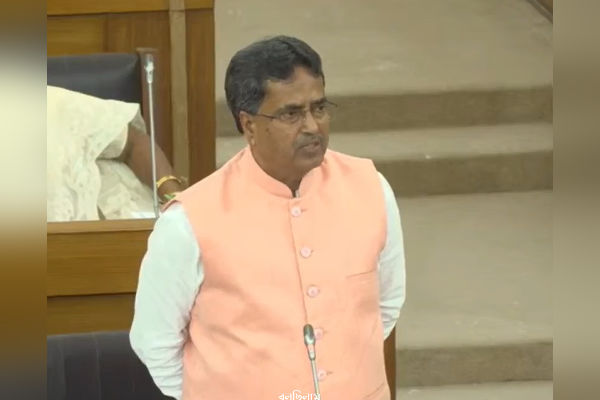
Tripura Chief Minister Dr Manik Saha on Thursday assured the State Legislative Assembly that the government would take all necessary steps to safeguard the interests of local residents in public employment and access to government benefits.
Speaking during a short-duration discussion on the state government’s decision to withdraw the Permanent Resident of Tripura Certificate (PRTC) as a mandatory document for public employment, Dr Saha clarified that the PRTC itself was not being abolished.
The Chief Minister said attempts were being made in some quarters to misinterpret the government’s decision and create confusion among the people.
“PRTC is not being abolished. This document will continue to have the same force as it has today,” Dr Saha said, while dismissing claims that the government intended to discontinue the certificate.
On the decision to remove PRTC as a mandatory requirement for government recruitment, the Chief Minister said the matter was currently sub-judice and, therefore, the government was not in a position to provide a detailed response on the issue.
However, he assured legislators that the government remained committed to protecting the interests of Tripura’s local population.
Dr Saha also highlighted the government’s earlier decision to make PRTC mandatory for public employment, asserting that his government had taken the step with the objective of protecting local interests.
“No one should forget that it is this government that made PRTC mandatory for public employment. No other government had shown this courage earlier,” he said.
The issue was raised by Tipra Motha Party MLA Ranjit Debbarma, who sought clarification on the implications of withdrawing PRTC as a mandatory document.
The Chief Minister said the government would continue to examine the matter carefully and take appropriate measures to ensure that local residents do not face any disadvantage in employment opportunities or government schemes.
The assurance comes amid continuing debate over the recruitment policy and concerns among sections of the population regarding protection of local interests.