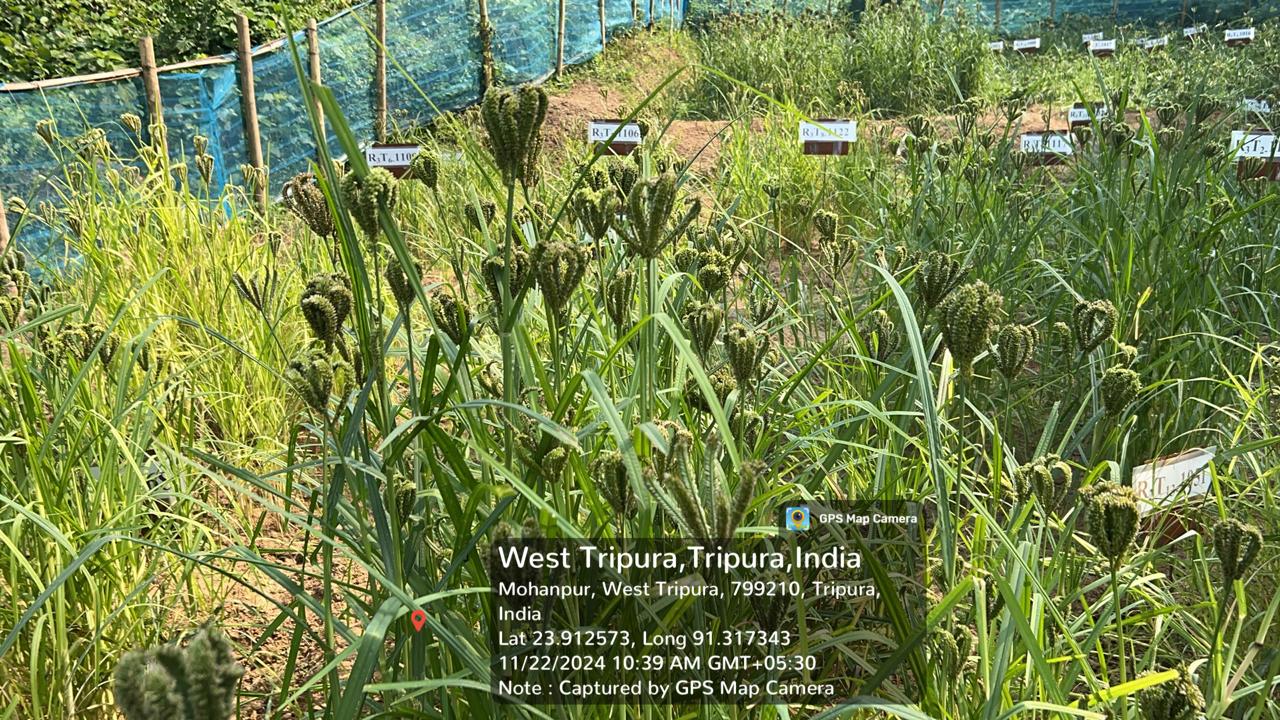
Finger millet, also known as ragi, is a highly versatile and nutritious cereal crop, belonging to the Eleusine genus. It is mainly grown in dryland regions across Asia and Africa and is widely consumed in India, particularly in the southern states of Karnataka, Andhra Pradesh, and Tamil Nadu, with limited cultivation in Odisha, Maharashtra, Uttarakhand, and Goa. Finger millet is considered one of the most important minor millets, contributing approximately 50% of the total small millet area and 65% of the production in India. It is rich in calcium, making it an excellent food source for growing children, patients, and infants over six months of age.
Area, Production, and Productivity:
Finger millet is cultivated over an area of 1.19 million hectares in India, yielding approximately 1.98 million tonnes of grain with a productivity of 1661 kg per hectare. Karnataka is the largest producer of finger millet, accounting for over 55% of the cultivation area and 60% of the national production. The crop ranks sixth in production after rice, wheat, maize, sorghum, and bajra.
Economic Importance:
Finger millet plays a crucial role in the diet of the people in northern and southern India. In the northern hills, the grain is often used to prepare chapatis and halwa, while in the southern states, it is used to make various foods like cakes, puddings, and sweets. The green straw of the plant is used as fodder for cattle, being highly nutritious and sweet-smelling. Finger millet is packed with essential nutrients, including 5–8% protein, 1–2% ether extractives, 65–75% carbohydrates, and 15–20% dietary fiber. It has the highest calcium content (344 mg/100 g) among all cereals.
Soil and Climate Requirements:
Finger millet thrives in a variety of soils, including loamy, sandy loam, and black soils with good drainage and fertility. It can tolerate soil salinity better than other cereals and prefers soils with a pH range of 4.5 to 7.5. The crop does well in regions with 1000 mm of annual rainfall, preferring warm temperatures with daytime temperatures between 30 and 34°C and night-time temperatures between 22 and 25°C. It is a drought-resistant crop, which makes it especially useful in semi-arid areas.
Land Preparation and Sowing:
For rainfed crops, land preparation includes ploughing the field 2-3 times to conserve moisture and smoothening the seedbed with secondary tillage equipment. In hilly areas, effective digging, land smoothening, and creating inward slopes with shallow drains help with rainwater management. Sowing is typically done in June in Uttaranchal, with most of the crop being sown during the kharif season. Transplanting is used in high-rainfall areas, while direct sowing methods like broadcasting, line sowing, and drilling are also common. The optimum plant population for higher yields is between 4 to 5 lakh plants per hectare, and seed depth should be between 3 to 4 cm.
Fertilizer and Nutrient Management:
For optimal growth, finger millet responds well to the application of farmyard manure (5-10 tonnes per hectare) and chemical fertilizers such as nitrogen, phosphorus, and potassium. The recommended fertilizer application for rainfed conditions is 60:30:30 kg/ha of N:P₂O₅:K₂O, with half the nitrogen applied at sowing and the rest split between 30 and 50 days after sowing. In irrigated conditions, the N:P₂O₅:K₂O ratio is 40:40:40 for the nursery and 60:30:30 for the main field.
Weed and Pest Management:
Weed control is critical during the initial stages of growth. Common weeds include Echinochloa colonum, Panicum miliaceum, and Cyperus rotundus. Pre-emergence herbicides like oxyfluorfen and isoproturon and post-emergent herbicides like 2-4-D sodium salt are effective for controlling weeds. Major pests affecting finger millet include army and cutworms, aphids, and leaf folders, while mosaic and blast diseases are common fungal threats.
Harvesting, Threshing, and Yield:
Finger millet matures between 120 to 135 days, depending on the variety and environmental conditions. The crop is typically harvested in two stages: the earheads are cut and dried, and then threshed. The yield varies based on cultivation practices and irrigation. Under rainfed conditions, the yield ranges from 0.7 to 0.8 tonnes per hectare for grains and 1.1 to 1.8 tonnes per hectare for fodder. In irrigated conditions, the grain yield can reach 3.0 to 3.5 tonnes per hectare, with fodder yield ranging from 3.5 to 5.0 tonnes per hectare.
Storage and Post-Harvest Management:
For grain storage, it is crucial to dry the seeds to a moisture content of 10%. To prevent pest infestations, seeds meant for planting should be treated with activated kaolin or malathion dust. Malting of finger millet is a traditional practice in India, and ragi malt is commonly used in milk beverages and as an infant food. In some regions, a fermented beer is also made from the grains.
Finger millet is a resilient and highly nutritious crop that can thrive in drought-prone areas with proper soil and water management. It provides significant economic benefits and contributes to the nutritional needs of millions. With its high calcium content, fiber, and health benefits, finger millet has the potential to play a key role in ensuring food security in semi-arid regions while also promoting sustainable agricultural practices. Through improved cultivation methods, pest management, and increased awareness, finger millet can continue to be an essential crop for enhancing both agricultural productivity and nutrition.