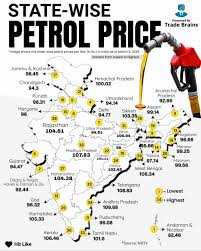
Petrol prices in India continue to remain a major concern for consumers, businesses, and policymakers. While international crude oil prices and central government excise duties play a significant role in determining fuel prices, state-level taxes are one of the most important factors causing variations in petrol prices across the country. The recent rise in petrol prices has once again highlighted the significant differences in Value Added Tax (VAT), cess, and other state levies imposed by various state governments.
India follows a federal taxation system in which both the Central Government and State Governments impose taxes on petroleum products. After the refinery transfer price, freight charges, dealer commission, and central excise duty are added, each state applies its own tax structure. As a result, petrol prices differ considerably from one state to another.
Among the states with higher tax burdens, Karnataka stands out. In Bengaluru and other parts of Karnataka, the state VAT component is approximately ₹29.78 per litre. This substantial tax contributes significantly to the retail petrol price paid by consumers. The state’s reliance on fuel taxation as a source of revenue has made Karnataka one of the higher-tax regions for petrol in India.
In Tripura, the taxation model differs from many other states. Instead of a fixed amount, the state levies VAT at 17.50% on the combined value of fuel cost, excise duty, and dealer commission. This percentage-based system means that any increase in the base fuel price automatically results in higher tax collections and higher retail prices for consumers.
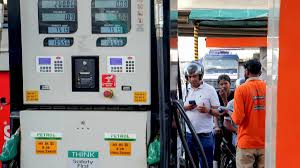
West Bengal also imposes a considerable tax burden on petrol. The state’s VAT and cess together amount to approximately ₹19.60 to ₹20.00 per litre, although the exact figure may vary slightly across districts. These taxes contribute significantly to the final retail price and affect transportation costs across the state.
Punjab follows a more complex taxation structure. The state charges VAT at 16.58% along with an additional tax of 10% or ₹14.93 per litre, whichever is higher. Combined with specific cess charges, the overall state tax burden generally ranges between ₹23.00 and ₹26.00 per litre. This structure ensures a substantial revenue stream for the state government while increasing the fuel cost borne by consumers.
Tamil Nadu adopts a hybrid taxation model. The state imposes a fixed levy of ₹11.52 per litre along with an additional 13% VAT calculated on the combined base price, excise duty, and dealer commission. This dual taxation system results in a significant contribution to the final petrol price and often keeps fuel prices higher than in many neighboring states.
Regional differences become even more evident when comparing broader zones across India. In the Eastern Zone, state VAT and cess together can reach approximately ₹34.63 per litre, making it one of the highest-taxed regions for petrol. Such high tax rates directly impact household budgets, logistics costs, and overall economic activity.
In contrast, the Northern Zone generally imposes a lower VAT burden of around ₹15.74 per litre. The relatively lower taxation helps keep petrol prices more affordable compared to several eastern and southern states. However, variations still exist among individual states and union territories within the region.
Assam, one of the key states in the Northeast, imposes a variable VAT structure resulting in state taxes ranging between ₹22.00 and ₹23.00 per litre. These taxes contribute significantly to the retail fuel price while serving as an important source of state revenue.
The continuing rise in petrol prices has far-reaching economic implications. Higher fuel costs increase transportat…