Agartala, April 28 — A brief spell of heavy rainfall has once again brought Agartala to a standstill, even as the India Meteorological Department issued a Red Alert for Tripura, warning of more intense weather in the coming days.
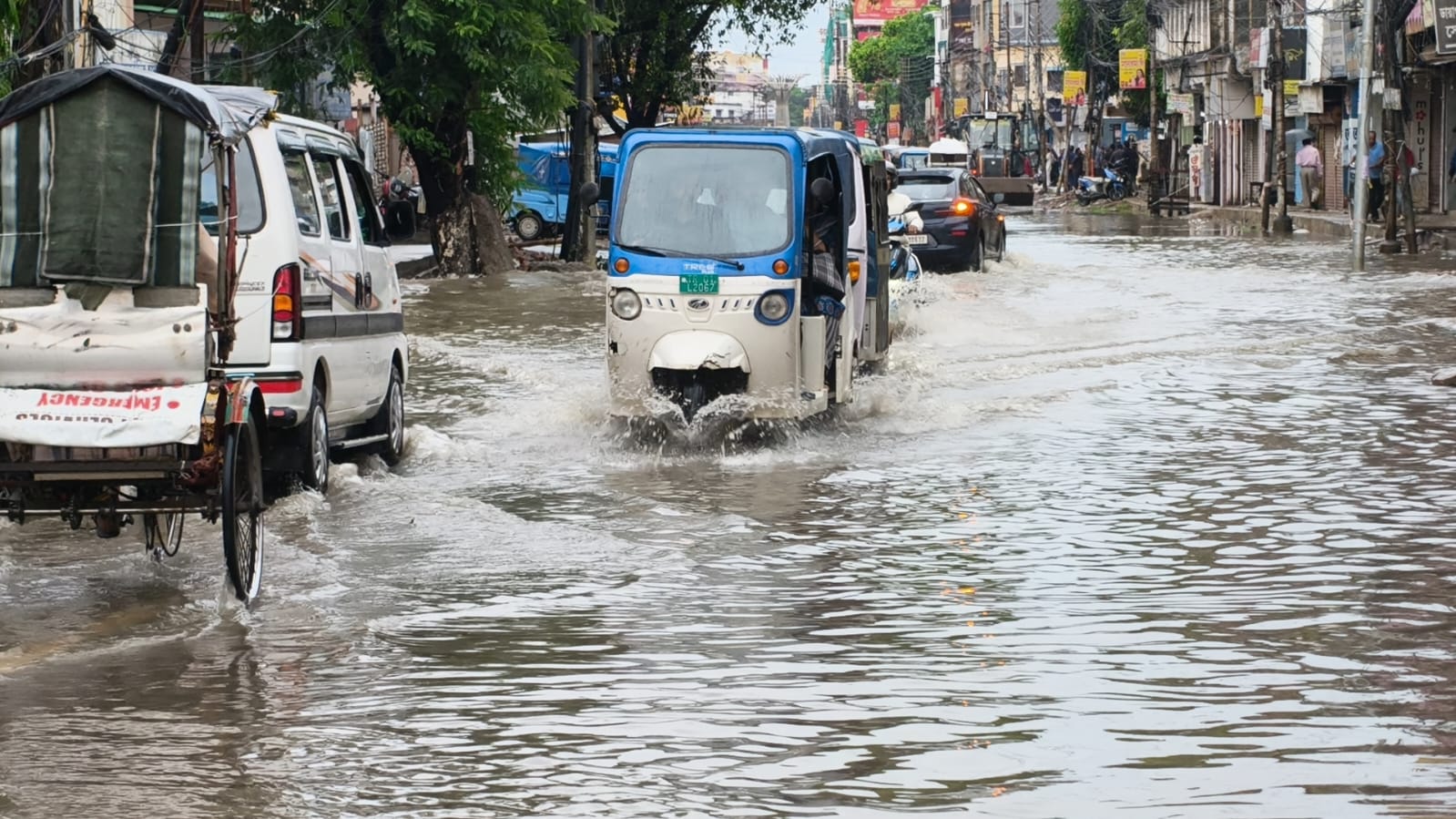
What began as an hour-long downpour quickly escalated into a full-blown urban crisis. By Tuesday morning, knee-deep water had submerged major roads, marketplaces, and low-lying residential areas across the city. Office-goers, schoolchildren, and daily wage earners struggled to navigate waterlogged streets, while traffic snarls and stranded vehicles added to the chaos.
The flooding has once again raised serious concerns over the city’s drainage infrastructure. Residents voiced frustration, calling the repeated waterlogging a stark reminder of unfulfilled promises under the Smart City initiative. “Every monsoon, it’s the same situation. Roads turn into rivers within minutes,” said a local shopkeeper whose business was disrupted due to water entering his premises.
Many citizens blamed clogged drains, poor maintenance, and lack of long-term planning for the recurring crisis. The situation has reignited demands for urgent reforms, with calls for both immediate relief measures and sustainable urban drainage solutions.
Meanwhile, the Red Alert issued by the meteorological authorities has heightened anxiety among residents. The forecast predicts thunderstorms, heavy to very heavy rainfall, and gusty winds reaching speeds of up to 80 km/h over the next three days. Such conditions raise the risk of further flooding, damage to infrastructure, and disruption of essential services.
Authorities have stated that they are closely monitoring the situation and are on standby to respond to emergencies. However, many residents remain skeptical, pointing out that similar assurances in the past have not prevented recurring monsoon-related disruptions.
As Tripura braces for more severe weather, the focus is now on preparedness and accountability. The latest flooding has not only exposed gaps in infrastructure but also underscored the urgent need for resilient urban planning to withstand increasingly unpredictable climate patterns.