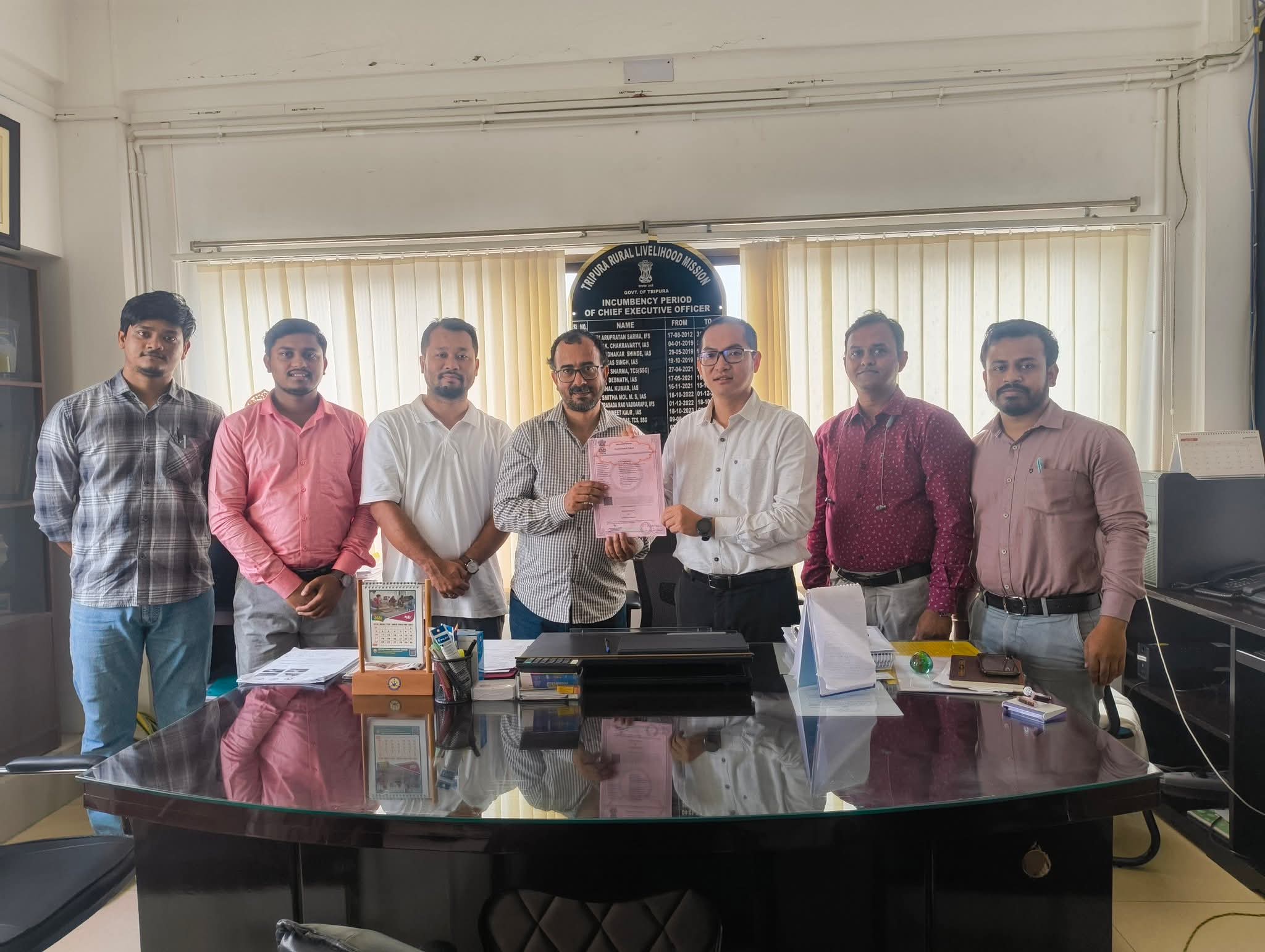
Agartala, May 19: In a major initiative aimed at strengthening rural livelihoods and promoting sustainable agricultural practices, the Tripura Rural Livelihood Mission (TRLM) has signed a non-financial Memorandum of Understanding (MoU) with SeSTA (Seven Sisters Development Assistance) to support 20,000 women associated with Self-Help Groups (SHGs) across the state.
According to TRLM officials, the agreement marks an important step toward enhancing sustainable agriculture-based livelihood opportunities for rural women in Tripura and creating pathways for long-term economic empowerment.
The MoU has been signed for a period of three years and focuses on empowering rural poor women connected with SHGs through capacity building, livelihood promotion and sustainable agricultural interventions. The partnership seeks to improve income-generation opportunities while encouraging self-reliance among women in rural communities.
TRLM stated that the collaboration with SeSTA aims to bring structured support to women involved in agriculture and allied activities by strengthening their skills, knowledge and access to livelihood opportunities. Through this initiative, women members of SHGs are expected to receive guidance and support in adopting sustainable agricultural methods that can improve productivity and income levels.
In a social media post, TRLM highlighted that the joint initiative would directly benefit 20,000 SHG members and contribute to building stronger rural economies. The mission noted that by promoting sustainable farming practices and diversified livelihood activities, the programme seeks to improve the socio-economic conditions of women and their families.
Officials believe that empowering women through livelihood initiatives remains a key component of rural development efforts in the state. They also emphasized that the partnership aligns with broader objectives of promoting inclusive growth and strengthening grassroots economic systems.
The collaboration is expected to create greater opportunities for women-led development by encouraging entrepreneurship and improving economic participation at the community level. Authorities described the initiative as a significant move towards fostering self-sufficiency and sustainable development among rural women in Tripura.